
'Exit Stage Below'
A Longmont Noir by Dennis Line - Editing by Bix Scatman
Chapter One: Arrival
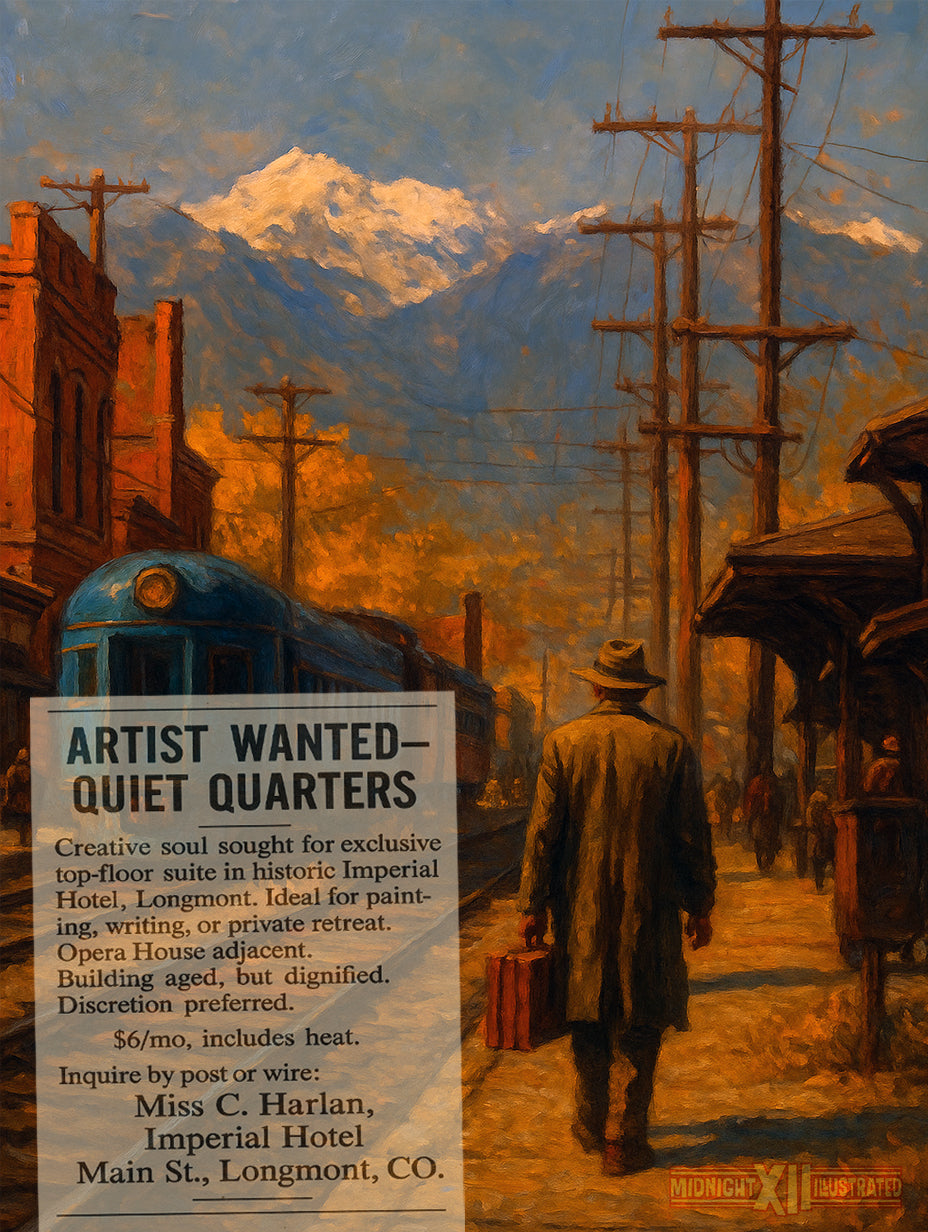
Julian Ames stepped off the train - into dust. Longmont, 1940. Post-Depression quiet. No welcome but the soft groan of the platform wood and the hum of silence between footsteps.
Main Street felt paused. Shops that had seen better days leaned slightly inward like they were tired of standing. A barbershop still flicked its pole out of habit. The bakery had paper in the windows. And halfway down the block stood the Imperial Hotel — its sign flaking, its windows gray with time.
He came to paint. That is what he told himself. He had found the place through a faded classified ad: "Top-floor artist's space, quiet and private. Opera-adjacent." He did not question the price. Did not ask why no one else had taken it. He just boarded a train and came west.
The clerk barely looked up. Handed him a heavy brass key and nodded toward the stairs.
"No one lasts long up there."
Julian pocketed the key. "“I’m not here for the view.”
Chapter Two: The Penthouse
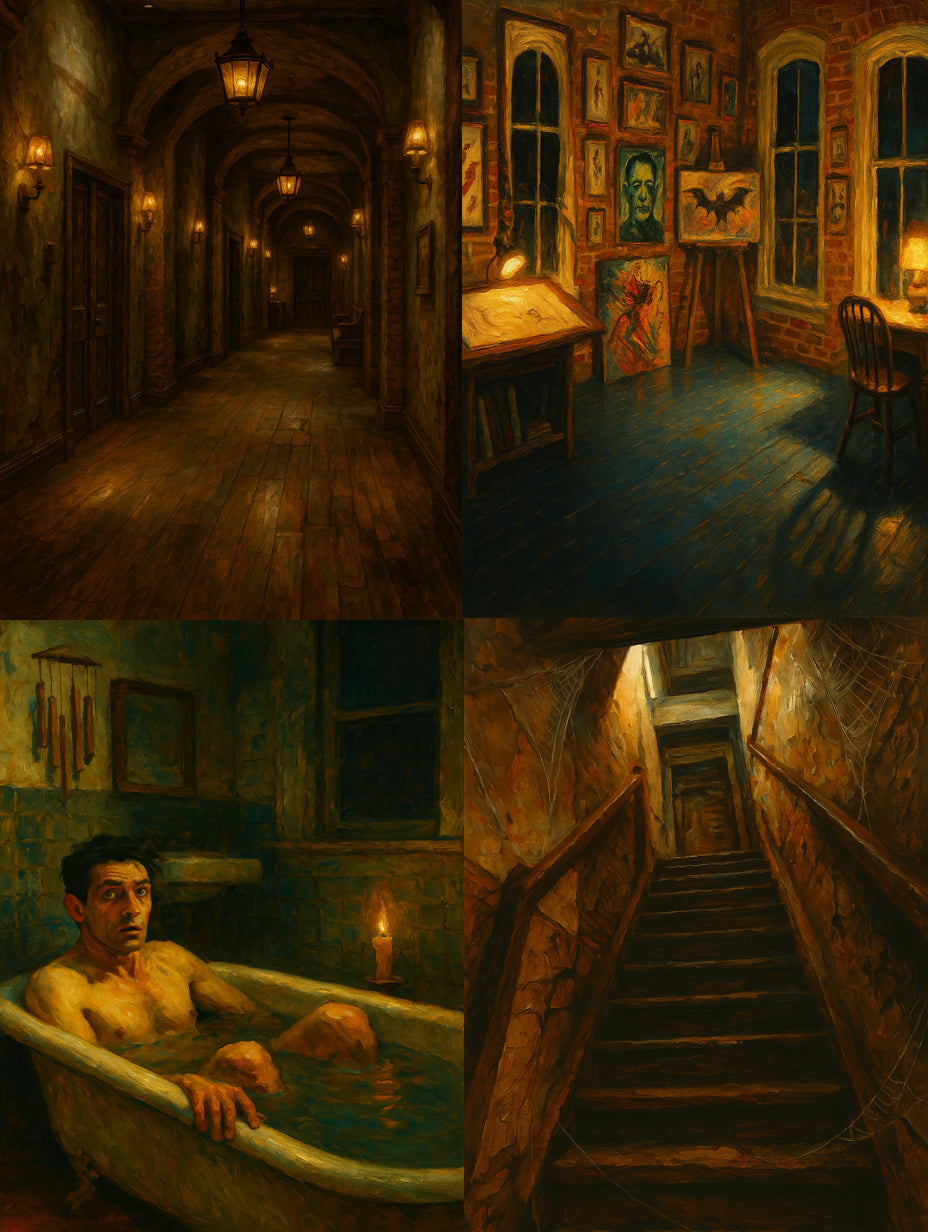
The top floor was a shell of something once grand. Long hallway. Divided rooms with warped doors. A wall of tall windows now mostly stuck shut. And silence—deep and settled, like the air hadn’t been disturbed in years.
The penthouse had once been a full floor of hotel rooms. Now, the walls had been stripped away in places, patched together in others. Julian walked through it slowly, boots echoing on old boards.
At the far end: a bathroom with a clawfoot tub, a wooden stall, and a rusted radiator. He hung a set of wind chimes just inside the door. Habit from another place. No forced air. No open windows. Still, something about that corner felt like it breathed.
Behind a door near the front room, he found a narrow staircase—steep and unfinished, leading upward.
The attic.
He climbed halfway. Then stopped. The smell turned him back. Dust. Guano. Something sharp beneath it. Bats lived up there, he could hear them shifting. Hundreds maybe. He made a mental note and let the door close behind him.
The long hallway stretched past what had once been a dozen rented rooms. At the very end, a metal fire escape rattled in the wind. A single window overlooked the street and the old opera house across the way—mostly boarded now. The past lingered in the view like smoke that had never cleared.
That night, he drew a quick map of the space. Labeled each room. Made a note of the attic stairs and the fire escape. It was cold, but not the kind that came from weather. The kind that seeped up through floorboards.
He ran a bath to warm up. Let the steam fill the cracked-tile bathroom. As he soaked in the clawfoot tub, something happened. Three loud knocks echoed on the bottom of the old porcelain, from below.
He froze. Water lapped around his ribs. Not pipes. Not creaks. Knocks. Then—a single knock on the glass window beside the tub.
It couldn’t have come from outside. That window was nearly invisible from the street, tucked in a spot only accessible from the roof. It had been painted shut for years.
The chimes stirred once. Not loud. Not subtle. Just...intentional.
Julian didn’t sleep. Not that night. Maybe not for a few after that.
He unpacked his brushes and canvases in silence, and watched the hallway shadows grow longer than they should have.
Chapter Three: The Green Room
Julian found the place two nights in.
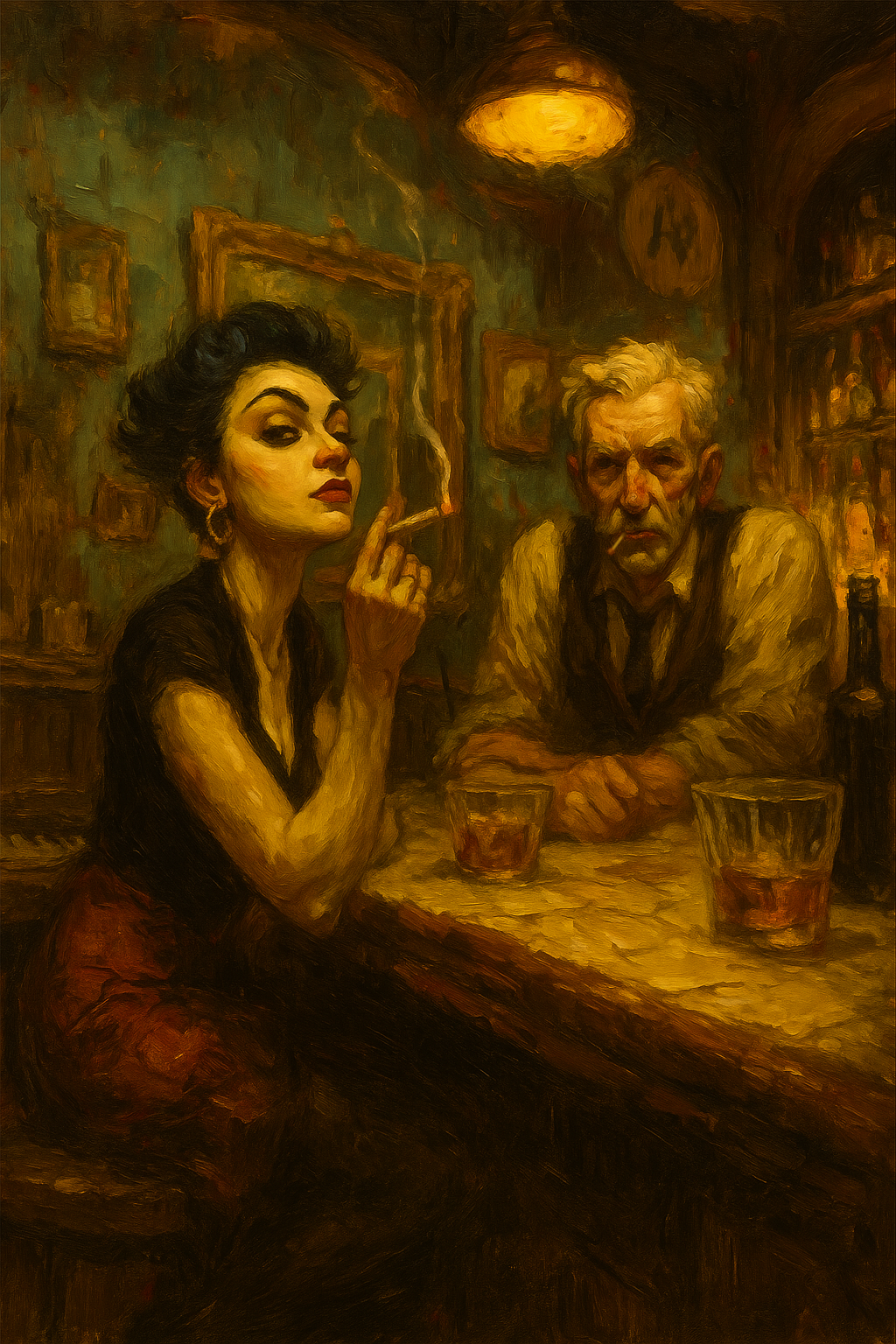
A speakeasy that never quite stopped speaking—hidden beneath the old opera house and still bearing the name it wore during prohibition: The Green Room. It sat half-sunk into the ground like the memory of a better decade. Cracked tile floors, a warped mirror wall, and a bar held up by habit and cigarette smoke.
Jan ran the place with a dry smile and a bottle of gin. She liked her martinis cold and her sarcasm colder.
“Painter in the penthouse?”, she said the first time he wandered in.
Julian nodded, pulling the collar of his coat back into place.
“That obvious?”
“New shoes, wrong town, right kind of damage.”
She slid him a glass of something clear and bitter.
“First one’s on the house. Second one’s for the ghosts.”
At a side table, James—the local shopkeeper—sat flipping through a paper, eyes darting like he expected his name to appear in the obituaries.
Mack, a drifter with Chicago shadows in his voice, leaned back against the wall, chewing on a matchstick and staring at nothing in particular.
They didn’t ask questions.
Julian didn’t offer answers.
That night, he walked back to the Imperial with the kind of silence that waits inside, already home.
Chapter Four: JavaStop
By morning, the fog had lifted and so had the town’s hush. Julian headed to the corner coffee shop, where a flickering neon sign buzzed faintly: JavaStop. It looked like it had been painted during the Hoover administration.
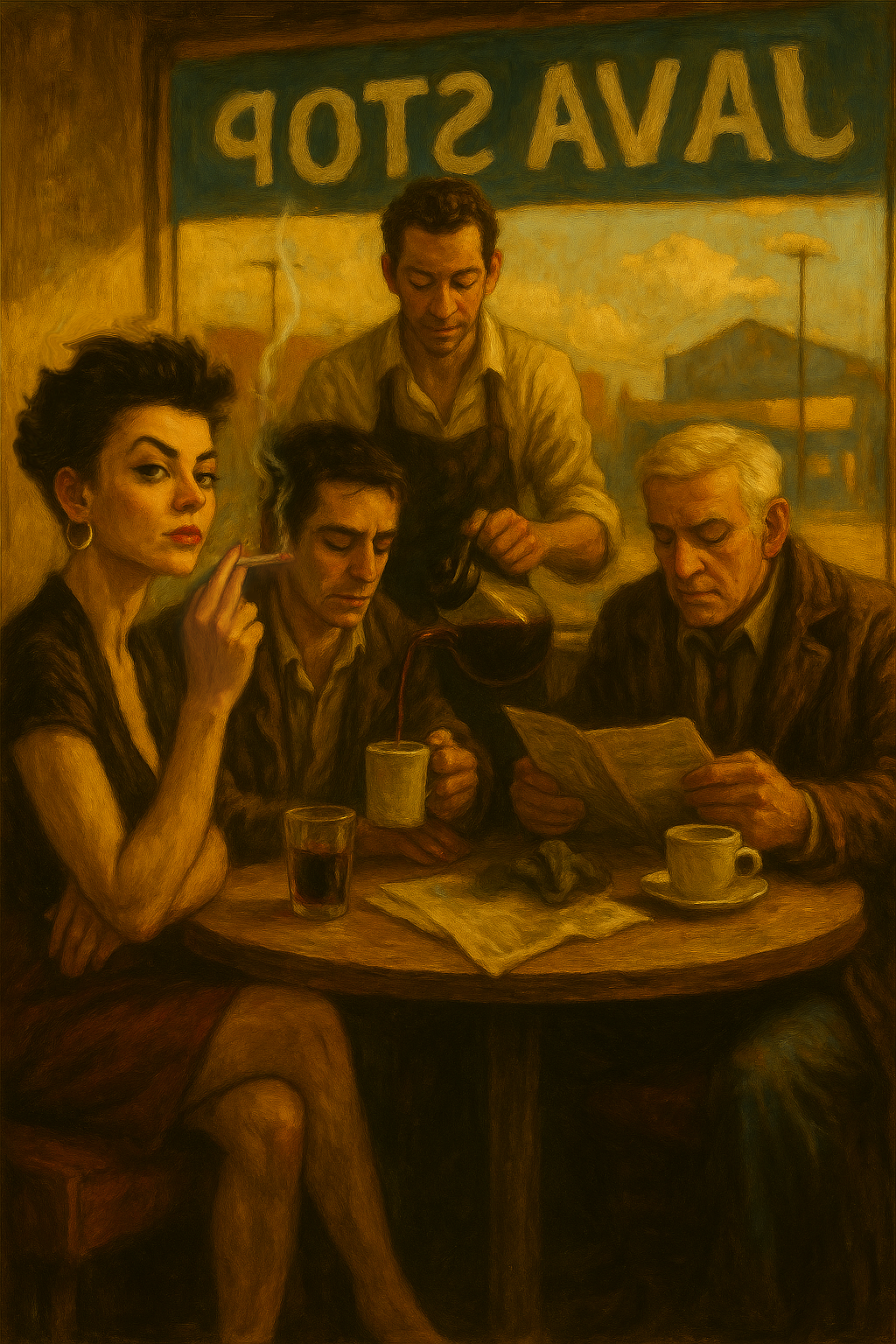
Inside, the light was warm and flat. Fogged windows blurred the street view like a memory half-remembered. Eileen worked the counter, steam curling around her like armor. Calvin handled the register with the cautious precision of a man who had learned not to expect too much from mornings—or people.
“You staying up at the Imperial?” Eileen asked, handing Julian a black coffee in a chipped mug.
Julian nodded, keeping one hand on the counter for warmth.
“That place has its moods,” Calvin said. “Best let it keep 'em.”
At a booth near the window, James sat hunched over a newspaper. Julian slid in beside him, still shaking the cold from his coat.
“Anything good in there?” he asked.
James didn’t look up.
“Depends how you define good.”
Julian sipped the coffee. Across the table, Eileen returned to refilling creamers. Calvin busied himself with the till, but every so often, his eyes flicked toward Julian like he expected him to vanish.
The bell above the door rang once, then again.
No one entered. They all looked up. Then back down.
Jan walked in, coat slung over one arm, hair windblown but deliberate. She spotted Julian at the table and slid onto the bench beside him.
“Anything unusual happen since you moved in?”
He looked up from his coffee. “Define unusual.” Jan smirked. “You brought the chimes, didn’t you?”
That landed. He blinked. She nodded, like that confirmed it.
“No one hangs chimes in the penthouse. Not anymore.” Julian didn’t reply. Just stared past her, toward the hotel.
Julian drained the rest of the coffee and glanced out the window toward the Imperial.
Something about the roofline looked different now. Like the shadow on the third floor had shifted.
Chapter Five: The Attic
That night Julian didn’t sleep.
The clawfoot tub, the knock on the window, the chimes—he kept replaying them in his head like a looped reel. The building creaked all night, but it was the silence between the sounds that felt the loudest.
By morning, he was pacing the long hallway of the penthouse, unsettled. That’s when he remembered the door near the front room. The one behind the coat rack. Narrow, unimpressive, almost an afterthought. He opened it.
A staircase, steep and unfinished, led upward into dark.
The attic.
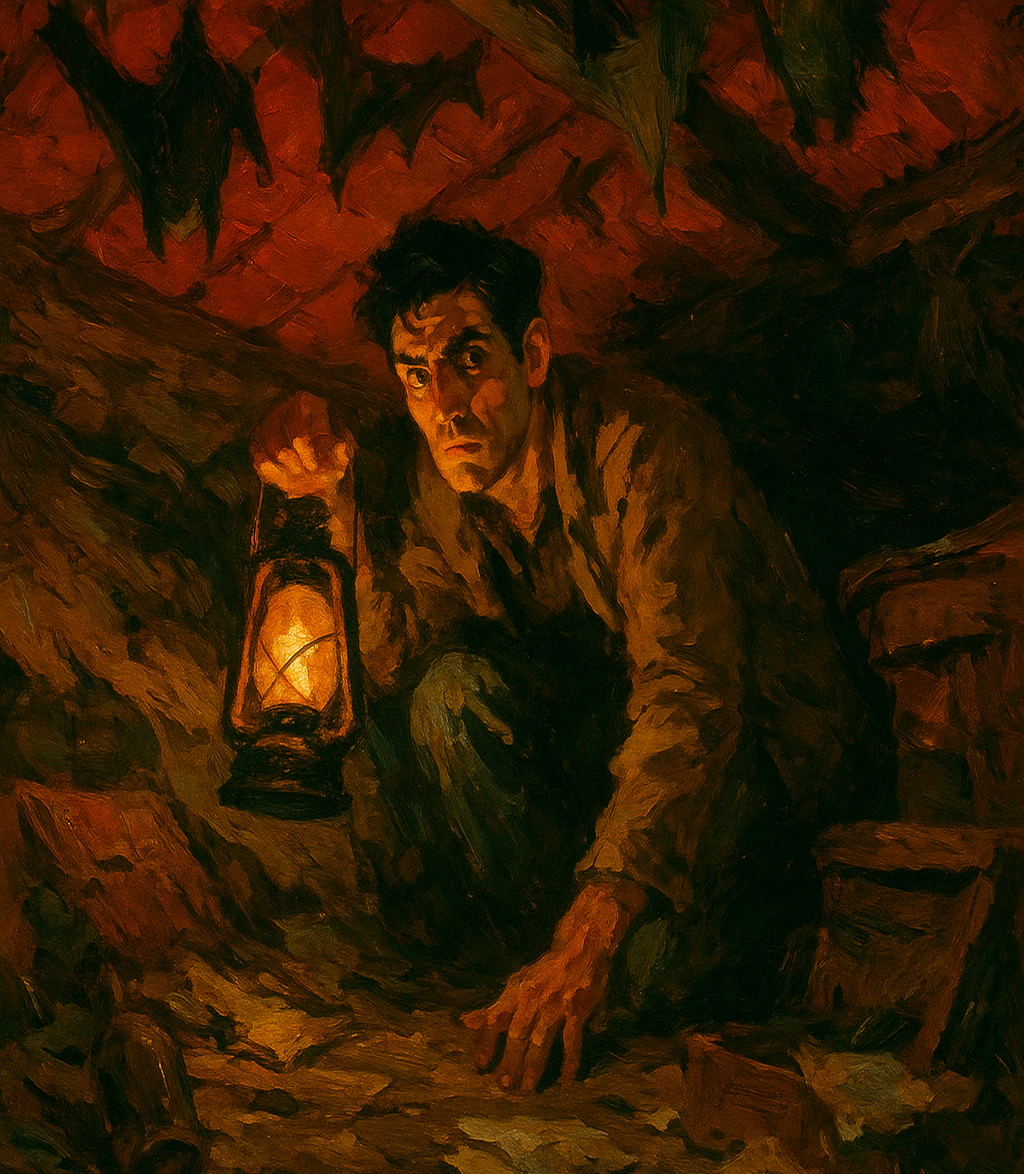
He grabbed his lantern and a jacket. The stairs groaned underfoot. At the top, he had to duck immediately—the ceiling was barely four feet high, and he had to stoop and crawl like a miner through an old shaft.
The space was claustrophobic, thick with dust. Ancient insulation hung in tatters. Crates, rotted books, a collapsed writing desk—junk from decades long past. But all of it felt strangely preserved, like someone had been here recently.
Bats clung to the rafters overhead, sleeping in silence. Their presence didn’t startle him now. In some strange way, they seemed like keepers of the place.
In the corner, beneath a lopsided trunk, he found it—a rolled paper tube wrapped in a faded ribbon and secured under a loose floorboard.
Inside: a hand-drawn map.
And folded inside that—just one page torn from a yellowed newspaper, brittle at the edges.
WILLIAM DICKENS SHOT DEAD — SON RIENZI ARRESTED
No date. Just the headline. The print had bled slightly, like the truth itself was soaked through.
He unfolded the map beneath it.
Old. Detailed. Marked with pencil annotations. The word Opera circled at the top. A straight line labeled CROSSWAY connected the opera house to the Imperial, running underneath both.
And there—on the hotel’s diagram—a small X beneath the kitchen stairs.
“Below the paint. Below the bones.”
He heard the whisper again, not with his ears but in his mind.
Julian backed out of the attic slowly, careful not to stir the colony above.
The chimes above the bathroom rang once as he re-entered the hall.
No wind. No movement. Just the note.
By nightfall, he had copied the map. Folded it twice. Pocketed it.
He didn’t tell Calvin. Or Eileen. Or James. Not yet.
Let them sip coffee and pretend the past stayed buried.
He knew better now.
Chapter Six: Beneath the Floorboards
The map was crude but clear. A charcoal sketch on brittle paper, nearly torn at the fold, tucked with purpose beneath the attic floorboards beside the newspaper clipping. Julian had unrolled it carefully the night before, tracing its lines under lamplight on the floor of the penthouse.
The opera house. A long, straight corridor. The Imperial Hotel. An X.
The X sat near the rear of the building, beneath what would’ve once been the hotel kitchen—or maybe the boiler room, back when heat was coal and water. He couldn’t stop thinking about the chimes. How they rang without wind. How the bats hadn’t scattered when he was up there, just watched.
And the words carved into the beam:
“Still not justice.”
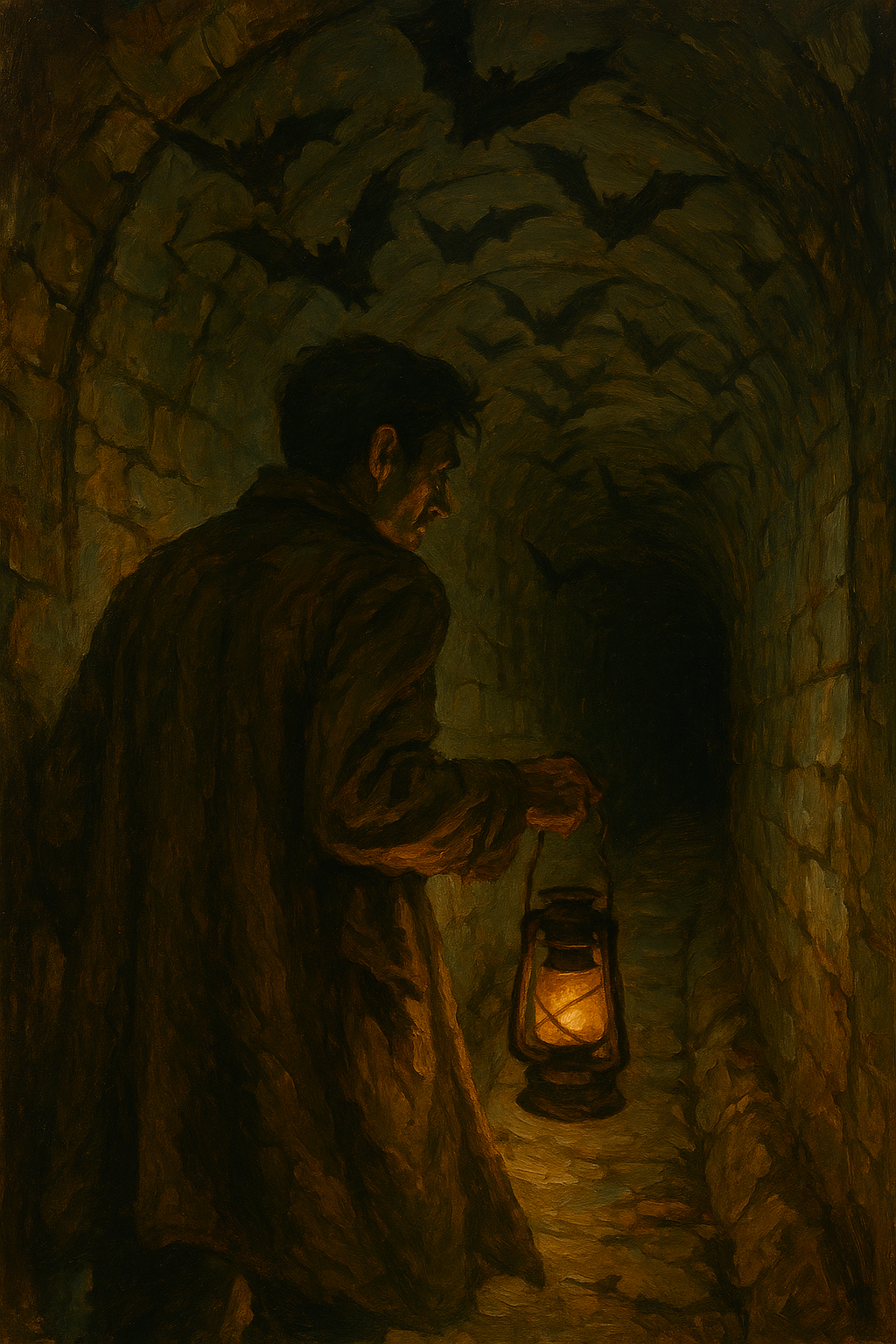
The next night, long after the streets fell quiet and the bar below had closed, Julian descended into the basement with a lantern and the folded map tucked into his coat. The boiler still gave off residual heat. He stepped behind it, crouching where the concrete dipped toward the foundation wall. He swept away dust and loose grit with his glove, revealing old tile and rotted joists.
The X, if the map was to be trusted, was here. He ran his fingers along the baseboard, tapping. Solid. Solid. Hollow.
A panel. He dug at the edges with the claw of a hammer he’d found upstairs. The board gave way suddenly with a dry snap, revealing a darker wood beneath—a hinged frame, once secured with a latch, now rusted open from years of neglect.
Julian lifted the hatch. The air that rose from below was wet, old, and quiet. Not stale. Not dead. Breathing.
He lowered the lantern and peered in.
A stone shaft, maybe six feet down, with a narrow, dirt-floored corridor stretching beyond. Braced with old timber. Moisture seeped from the walls. A discarded whiskey bottle lay on its side in the corner—dusty, label half-gone. He climbed down slowly, boots scraping the edge. The tunnel’s entrance was just wide enough to move forward hunched. The walls closed in fast.
He paused halfway in and looked back at the hatch. Still open. Still visible. Still… possible to walk away. But he didn’t.
He turned and moved forward, the flicker of the lantern stretching shadows along the beams. Bats fluttered overhead, stirring but not fleeing. They’d made their home here. Maybe they’d always been here. Twenty feet in, he stopped.
A wooden crate, half-rotted, had been shoved to the side. Beneath it, carved into the stone with what looked like a nail or knife: “W.D. 1877” Julian stared.
William Dickens.
He felt the cold before he saw it—an unnatural draft that slipped around his neck like a warning. He stepped forward again. And then, far ahead, beyond the shadows—
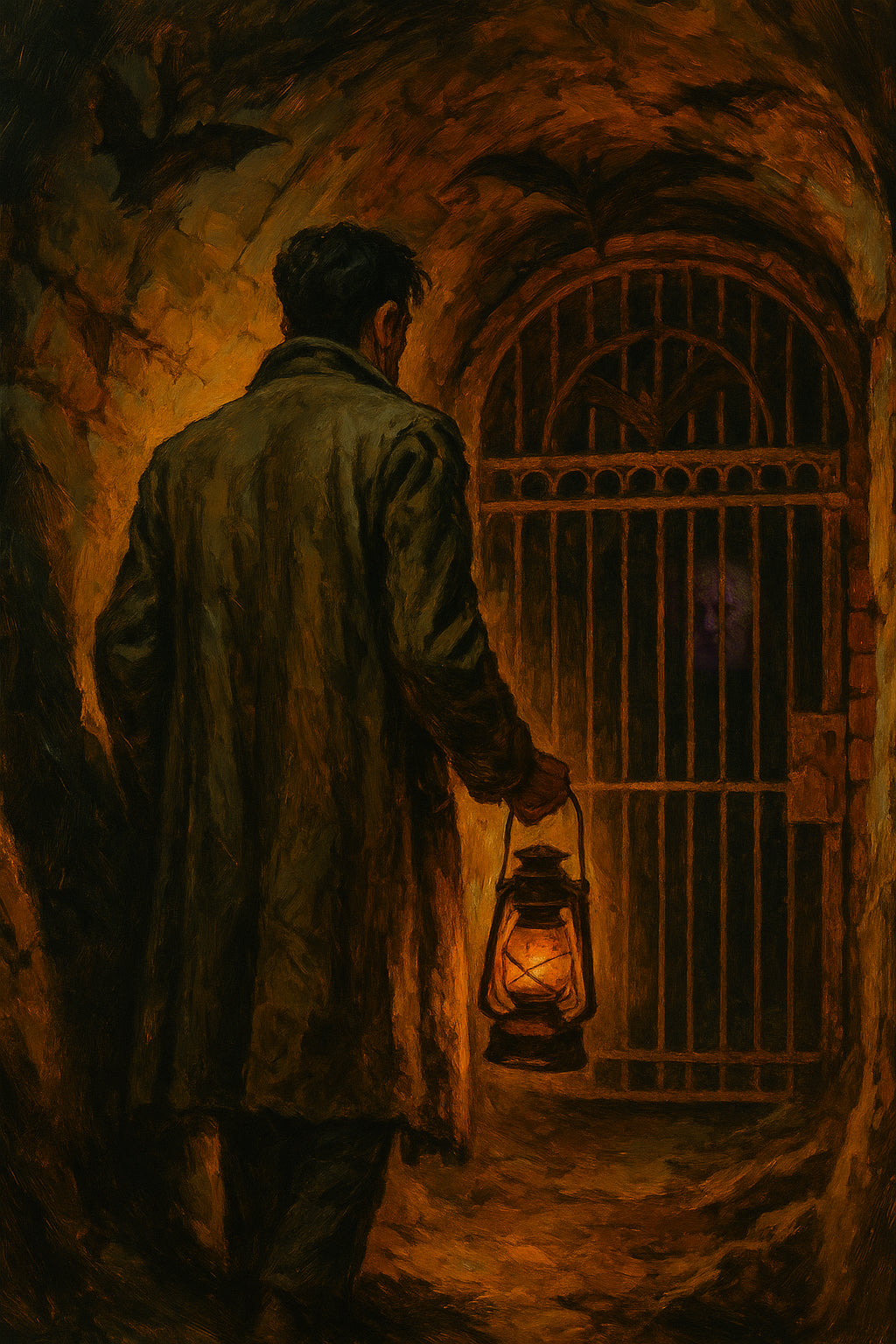
Iron. A gate.
Rusted. Blackened. Still bolted shut.
And behind it— A shape.
Motionless. Watching.
Chapter Seven: The Gatekeeper
Julian froze.
The figure behind the iron gate didn’t move. Didn’t speak. Just stood—half-shadowed in the faint lantern glow, like it had been there the whole time. Like it had been waiting.
The tunnel was quiet. Too quiet. Even the bats had gone still. He raised the lantern slowly. The light caught the figure’s face for a second—just long enough.
A man. Older. Heavy brow. Broad shoulders. Dressed in a style two generations out of place.
The resemblance to the one surviving photo he’d seen in the coffee shop—William Dickens, circa 1905—was unmistakable. Same thick jaw. Same downward gaze.
Julian didn’t speak at first. He didn’t need to. The man behind the bars didn’t blink, didn’t breathe. But he didn’t fade either.
Julian stepped closer, boots echoing slightly in the damp tunnel. The air was cold now, colder than stone should allow.
“You stayed,” Julian said aloud. “He left, but you stayed.”
The figure tilted its head. Not in agreement. Not in denial. Just… acknowledgment.
“They all believed he killed you,” Julian whispered. “Hung himself in the hotel attic. But it wasn’t true.”
Still no reply. Julian pulled the folded clipping from his coat and pressed it to the bars. “He was acquitted. Left Colorado.”
The ghost didn’t move, but something in the air did— like pressure changing before a storm. The lantern flame danced low, then tall, then steady again.
Julian lowered the paper. The bars were thick with rust. One had a dent like something had struck it hard—years ago.
“So why are you still here?” he asked. “Why linger in this place?” A sound behind him.
He turned—nothing but damp stone. He turned back. The figure was gone. The gate remained.
Julian gripped one of the iron bars and felt the chill crawl into his fingertips. He pulled the lantern higher and looked past the gate. The tunnel bent slightly to the left, then disappeared into black.
But etched into the brick at eye level, only visible when the flame passed just so, were words scratched into mortar:
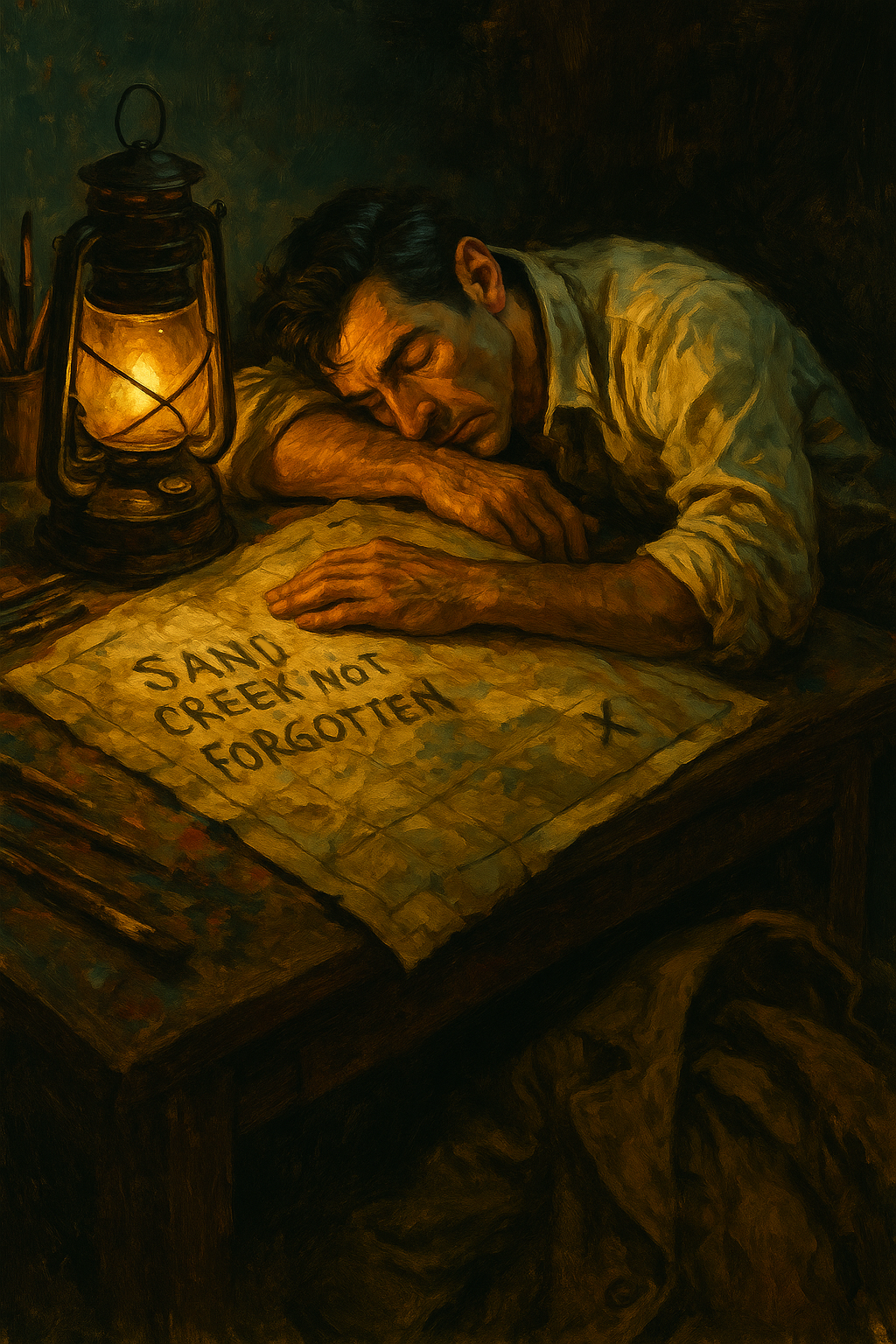
“Sand Creek was not forgotten.”
Julian staggered back. He didn’t remember placing his hand against the wall, but there it was—steadying him. Cold. Shaking.
The ghost hadn’t spoken. But the story had.
Chapter Eight: The Weight
Julian didn’t sleep that night. Or if he did, it was only long enough to see the tunnel again in his dreams—only this time, the figure behind the gate was pacing. Whispering. Bleeding.
He awoke before dawn, boots still damp, coat on the floor beside the desk, the map now spread out across a paint-stained table. The corner labeled X had smudged from moisture. The words he’d seen—Sand Creek was not forgotten—burned hotter than the rest.
He stared at his hand.
It still ached where he’d gripped the iron bar.
By mid-morning he was at JavaStop, sitting at the end booth, two cups in, the paper untouched. Calvin slid another mug across without a word. James arrived late and sat across from him, coat collar up, eyes tired.
“You look like you saw him again,” James muttered.
Julian didn’t answer.
Calvin wiped the counter, paused. “He’s not the only ghost down there.”
“I know,” Julian said. “But he’s the one that stayed.”
Eileen glanced over. Her expression softened. “He never spoke to me,” she said quietly. “But he was always there. Down in the stone.”
James unfolded the newspaper. “You saw the writing?”
“I did.”
“Sand Creek?”
Julian nodded.
James closed the paper. “Nobody talks about that. Not in this town. Not in the papers. Not even in school.”
Calvin added, “He was there, you know. William. Young. Part of the militia. They said he rode in after the worst was done, but…”
He let the sentence rot in the air.
“But ghosts don’t stay for accidents,” Julian said.
Silence followed. Just the hiss of steam from the espresso machine and the scrape of a chair moving too slow.
“What are you going to do?” Jan asked from the corner, arms folded.
Julian stared into his coffee, then past it, out the fogged window toward the Imperial.
“I’m going to paint.”
Chapter Nine: The Canvas
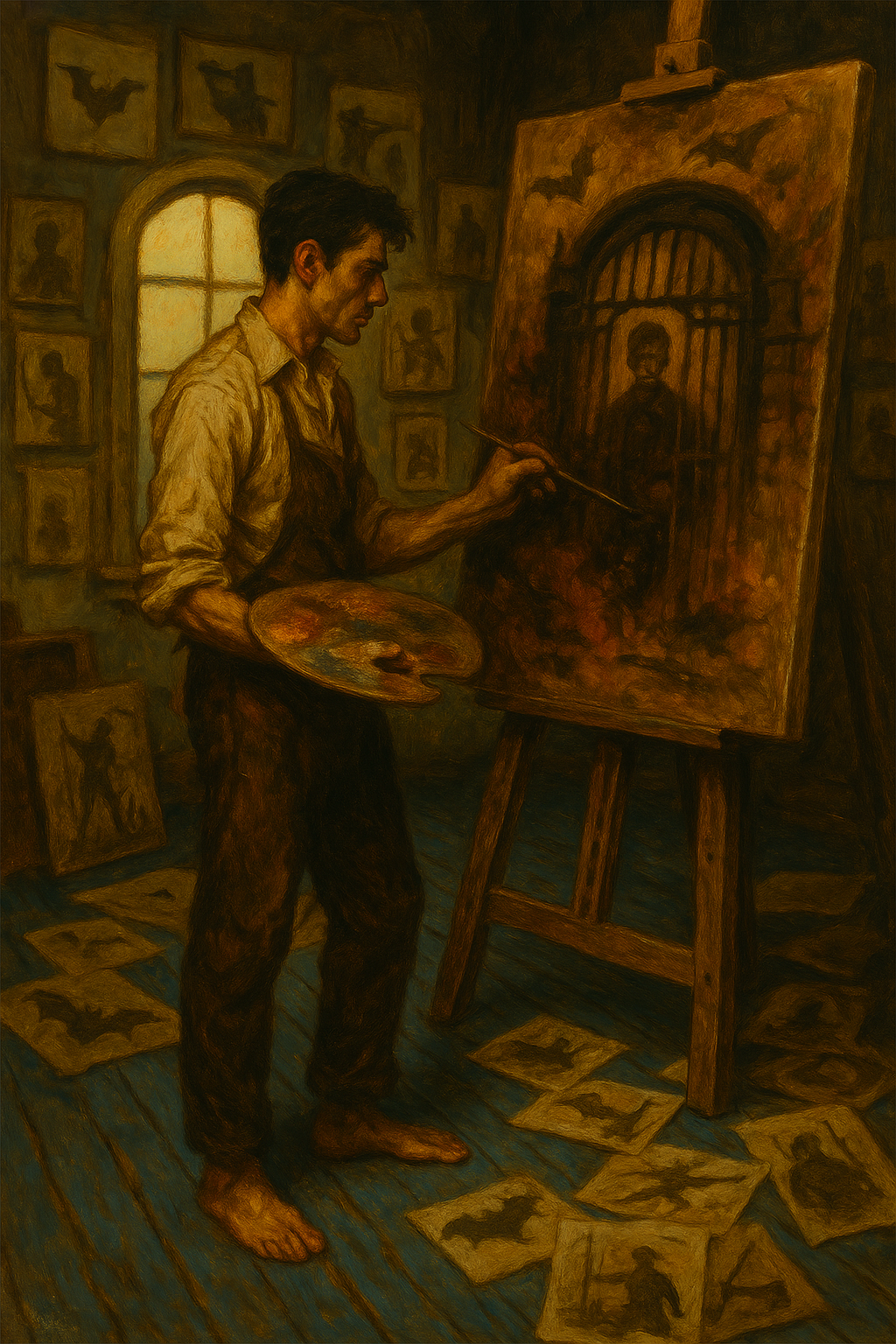
Julian covered the windows with drop cloths. Not to block the light—there wasn’t much to begin with—but to close out the town. To shut out the eyes that refused to see.
He stood in the center of the penthouse, barefoot, sleeves rolled, canvas propped against an easel older than the building itself. The floor around him was covered in sketches—bats, tunnel walls, twisted iron, a face behind bars, a rusting gate, a boy with a rifle, a man who didn’t leave.
He mixed ochres, greys, and rust-reds. Let the palette take its own shape. No outlines. No reference photos. Just memory.
And ghosts.
The first strokes were wide—slabs of stone, streaks of earth, the weight of the tunnel pressing in from the margins. He built the space first, the feeling of narrowness, of air too heavy to breathe, of truth sealed behind iron and brick.
Then the gate.
Not perfectly straight. Bent. Scarred.
Then the figure—William—not as a man, but as a presence. Formed of shadows and soot. The suggestion of hands. A jawline seen through rust. A gaze you couldn’t meet, only feel.
The top of the canvas he left open—where the ceiling should be—bats circled. Not monstrous. Not symbols. Just keepers.
Guardians.
He painted the line last.
“Sand Creek was not forgotten.”
Etched into brick. Scratched deep. Almost illegible unless you knew what to look for. That’s how the truth often lived—buried in walls.
By dusk, the painting was done.
He didn’t sign it.
Didn’t date it.
Didn’t frame it.
He just stood there, watching the last light of the day melt across the floor.
Somewhere outside, the chimes rang.
One soft note.
He didn’t turn to look.
He just exhaled.
And let the silence settle.
Chapter Ten: The Exit
Julian left the painting where it stood.
No show.
No explanation.
No press release.
Just oil, canvas, wood, and silence.
The next morning, Jan found him at the JavaStop counter.
No sketchpad. No notebook.
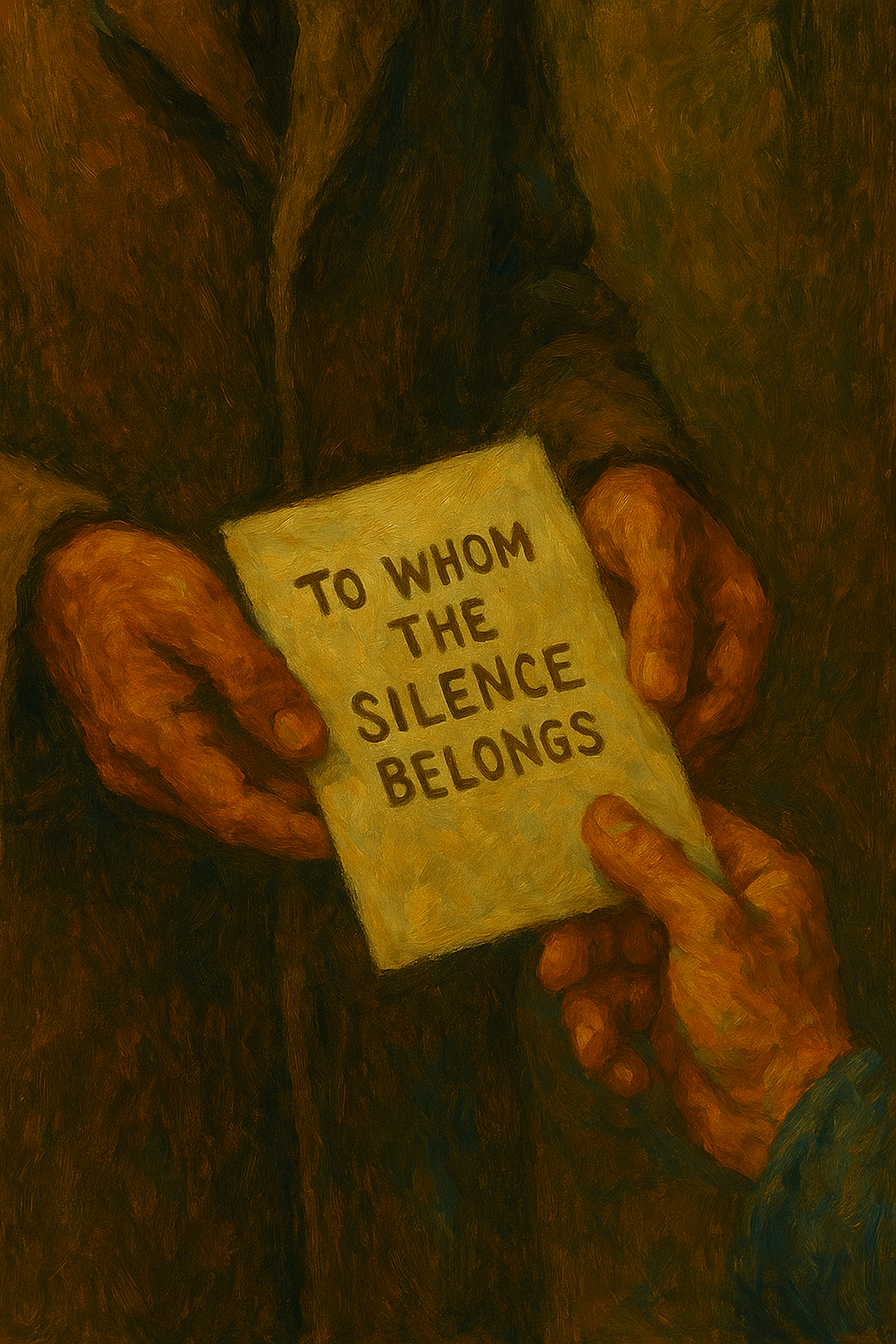
Just a single envelope in his coat pocket, addressed in block letters:
To Whom the Silence Belongs
He passed it to Calvin.
“You can hang it. Or burn it. Doesn’t matter now.”
James came in a few minutes later, paused at the door, eyes drawn to Julian like he already knew something had changed.
Julian stood, coat slung over one shoulder. He nodded once.
No handshakes.
No farewells.
Just a man who’d finally painted something for himself.
He didn’t take the map.
Didn’t take the clipping.
He left those in the attic, right where he found them.
Back in the Imperial, the chimes rang once more.
No wind.
No footsteps.
No reply.
Just the sound of something old settling into place.
And beneath it all, the tunnel waited.
But the gate stayed shut.
The painting remained in the penthouse for years.
No plaque. No story.
Just a canvas in a forgotten room, seen only by those who needed it.
And sometimes, when the hallway was quiet and the dust undisturbed, the chimes still rang.